Authoritarian Shift or Normal Politics? Let’s Look
Many Americans feel uneasy right now.
Courts are challenged. Elections are questioned. Federal power feels closer to daily life.
Some people see normal conflict. Others see democratic backsliding.
The question worth asking is simple.
Is the United States becoming authoritarian, or is the current administration actively pushing it in that direction?
This article avoids party labels. It focuses on patterns you can verify, with links to court rulings, executive orders, and reporting from across the political spectrum.
What “authoritarianism” means in plain English
Authoritarianism does not mean “a policy I hate.”
It means power concentrates until real checks stop working.
Political scientists often watch for a cluster of warning signs:
- Courts still exist, but rulings become easier to ignore
- Elections still happen, but the system tilts through rules, fear, or intimidation
- Law enforcement becomes more political and less accountable
- Independent institutions are pulled under executive control
- Protest is treated as a threat rather than a right
- Loyalty matters more than competence in public service
- Truth becomes optional, especially around state power
No single item proves authoritarianism. The pattern matters.
Trump Administration Fascist / Authoritarian Traits — Evidence
Legend✓ Accomplished — realized in practice
◐ Partially accomplished — uneven, contested, limited, or constrained by institutions
△ Attempted and failed — clear effort met with resistance
— Not attempted
| Trait (Operational Definition) | Status | Examples (each with link) |
|---|---|---|
| Mythic ultranationalism (decline → rebirth) | ✓ | “Make America Great Again” as national restoration (Britannica); immigrants framed as “invasion” (NPR); “poisoning the blood” language (Washington Post) |
| Leader as sole legitimate voice of the people | ✓ | “I am your voice” (Time); refusal to accept loss (AP) |
| Opposition framed as enemies | ✓ | “Enemy of the people” press attacks (NYT); opponents called traitors (Reuters) |
| Systematic attacks on independent media | ✓ | “Fake news” delegitimization (Pew); license revocation threats (Reuters) |
| Rejection of pluralism/minority legitimacy | ✓ | Muslim travel ban (SCOTUSblog); migrants framed as criminals (BBC) |
| Politicization of truth | ✓ | False fraud claims (AP); contradiction without correction (Washington Post Fact Checker) |
| Mass mobilization via grievance/fear | ✓ | Rally rhetoric (NPR); constant emergency framing (Politico) |
| Loyalty tests over competence | ✓ | Firings for refusal to act unlawfully (NYT); pressure on DOJ (DOJ Inspector General) |
| Attacks on judicial legitimacy | ✓ | “So-called judge” rhetoric (Reuters); partisan framing (SCOTUSblog) |
| Electoral delegitimization | ✓ | Preemptive fraud claims (AP); “rigged” narrative (Reuters) |
| Militarization of politics | ✓ | “Law and order” absolutism (NYT); federal force optics (ACLU) |
| Permanent internal enemy narrative | ✓ | Migrants/media/deep state framing (ADL) |
| Tolerance of political violence | ◐ | “Stand back and stand by” (Wall Street Journal); Jan. 6 minimization (Reuters) |
| Paramilitary/militia sympathy | ◐ | Refusal to condemn armed groups (CNN); shared symbols (ADL) |
| Erosion of civil service | ◐ | Schedule F order (Federal Register); “deep state” rhetoric (Brookings) |
| Selective law enforcement | ◐ | Calls to jail opponents (BBC); ally protection (ProPublica) |
| Internal security forces used for intimidation | ◐ | Portland federal agents (NYT); unidentified officers (ACLU) |
| Curtailment of protest rights | ◐ | Lafayette Square clearing (Inspector General Report); militarized response (Human Rights Watch) |
| ICE used as internal coercive force | ◐ | Minnesota ICE surge (Reuters); raids chilling communities (NPR) |
| Agent immunity/insulation | ◐ | Federal preemption claims (DOJ filings); resistance to state oversight (Guardian) |
| Neutralization (delay/disregard) of courts | ◐ | Delayed compliance (NYT); forum shopping (Brennan Center) |
| Manipulation of election rules | ◐ | Absentee ballot attacks (NPR); state pressure (NYT) |
| Disenfranchisement via fear | ◐ | ICE chilling turnout (Brennan Center); Minnesota fear effects (Reuters) |
| Corporate-state ideological fusion | ◐ | Crony favoritism (ProPublica); punitive rhetoric (CNBC) |
| Expansion of emergency powers | ◐ | Border emergency (Congressional Research Service); court limits (SCOTUSblog) |
| Leader above the law | ◐ | Absolute immunity claims (DOJ memos); loyalty pardons (NYT) |
| Subordination of judiciary | △ | DOJ pressure attempts (Senate Judiciary); blocked by courts (AP) |
| Annulment/overturn election | △ | Jan. 6 pressure (Jan. 6 Committee Report); fake electors (DOJ) |
| Personalization of military | △ | Domestic troop calls (Reuters); refusal by military (Atlantic) |
| One-party state | — | Opposition legal (Freedom House) |
| Abolition of elections | — | Elections proceeded (EAC) |
| Ideological totalism | — | No coherent state doctrine (Brookings) |
| Total control of culture/education | — | Pressure without capture (PEN America) |
| Mass political purges | — | No systematic arrests (Amnesty) |
| Consolidated authoritarian state | — | Institutions constrained consolidation (Freedom House) |
What we can observe right now
Courts function, under sustained pressure
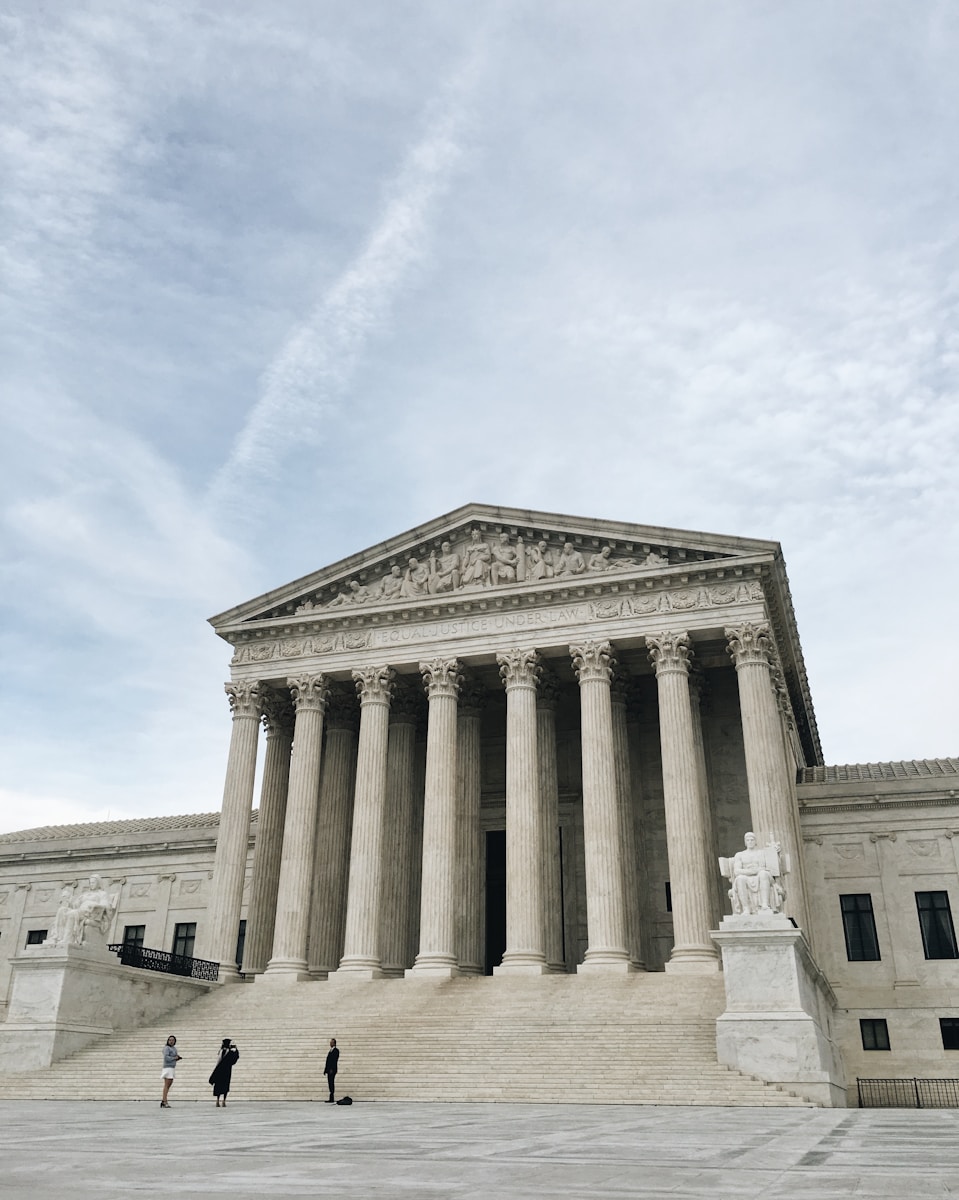
Courts continue to issue injunctions and block executive actions, which still acts as a real constraint. Legal analysis at SCOTUSblog documents how judges increasingly serve as the front line against executive overreach.
At the same time, judges are publicly attacked as illegitimate, and compliance with rulings is contested or delayed. Courts do not need to be abolished to be weakened. They only need to be treated as optional.
Elections continue, while the administration pushes federal control
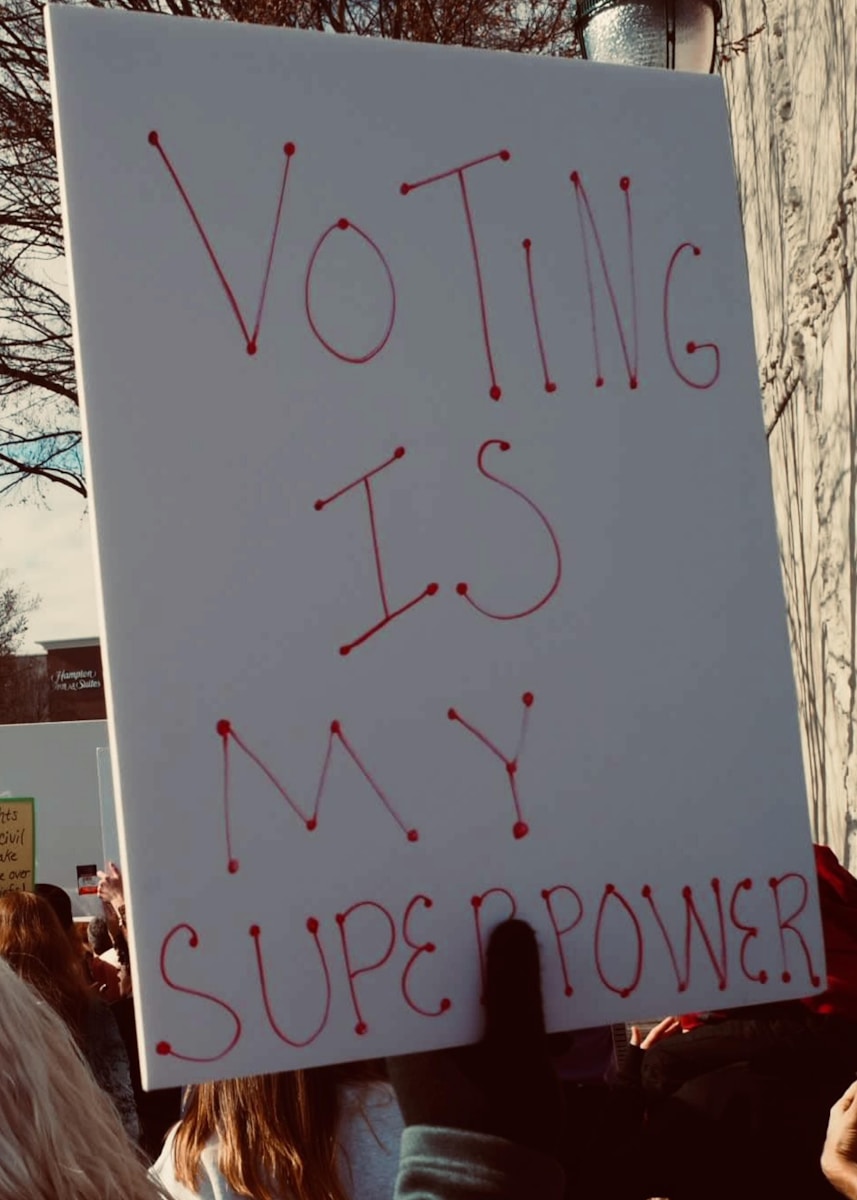
States traditionally administer U.S. elections. That decentralization is a safety feature because it limits the ability of any single authority to control outcomes.
The current administration openly promotes expanded federal involvement in election administration. Trump publicly suggests that the federal government should “take over” state-run elections, as reported by ABC News, arguing that states cannot be trusted.
At the same time, the White House declines to rule out federal immigration agents appearing near polling sites, according to Reuters, raising concerns about voter intimidation even without formal deployment plans.
Trump-aligned lawmakers also push federal voting bills that would significantly change registration and voting rules nationwide. The Washington Post reports these proposals would impose new documentation requirements and restrict commonly used voting methods.
The administration issues executive action aimed at reshaping election administration. A March 2025 executive order on election “integrity,” published by the White House, prompts legal concern, with Votebeat explaining how it could alter state-run processes.
These moves do not cancel elections. They centralize control over election rules and public confidence.
Protest is reframed as a security problem
In democratic systems, protest is treated as a normal part of politics.
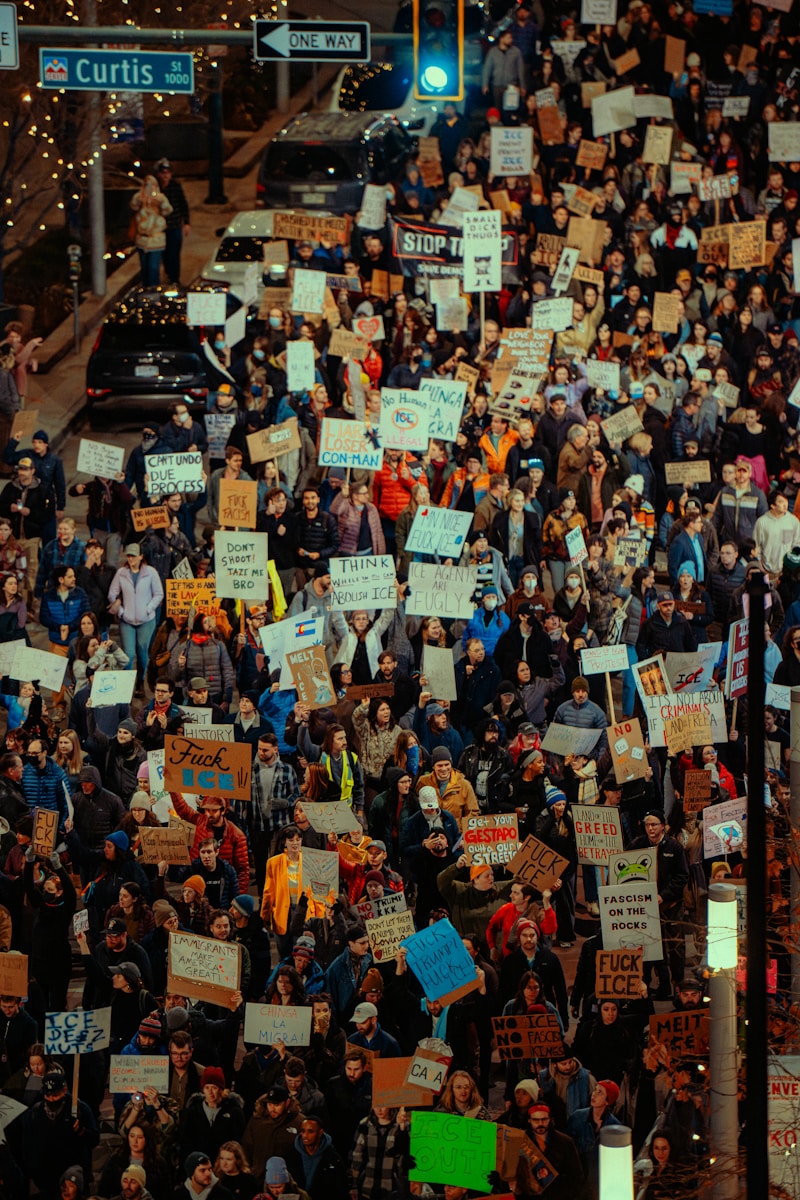
In authoritarian-leaning systems, protest is framed as disorder, extremism, or threat.
The current administration uses law-and-order rhetoric to justify aggressive responses to protest, including expanded federal involvement. Past Inspector General findings on federal crowd-control operations remain relevant because the same legal and tactical frameworks are now defended again.
The Department of the Interior’s Inspector General previously found that federal officers cleared peaceful protesters from Lafayette Square without adequate justification, a finding documented in the official review.
What matters now is not the history lesson. It is the precedent: once protest is treated as a security threat, escalation becomes easier and accountability weaker.
Courts find ICE repeatedly violates the law
It is possible to support immigration enforcement and still demand legality.
The issue is not whether ICE has authority. It does. The issue is whether ICE follows the limits imposed by courts and the Constitution.
Recent reporting shows that it often does not.
The Associated Press reports on an ICE memo asserting agents can enter homes without a judicial warrant. Fourth Amendment experts strongly dispute this claim.
A federal judge explains why in a ruling covered by Wired, noting that ICE paperwork does not qualify as a judicial warrant.
The Brennan Center explains why these practices violate the Fourth Amendment.
Courts also document ICE ignoring court orders. A federal judge in Minnesota reports ICE likely violated dozens of orders in one month, stating that “ICE is not a law unto itself,” as reported by KSTP.
In Colorado, lawyers accuse ICE of violating a federal injunction against warrantless arrests, according to KUNC.
In a constitutional system, enforcement follows the law. In an authoritarian-leaning system, the badge defines the law.
Courts find federal agents made false claims about enforcement
Spin is normal in politics. Systematic falsehoods about state violence are not.
A federal judge finds that immigration agents repeatedly use unlawful force and then lie about what happened. In a ruling covered by WTTW, the court states the government’s claims were “simply not credible.”
The court’s findings describe repeated misrepresentation of threats and conduct.
This matters because authoritarian politics depend on undermining shared reality.
Loyalty replaces competence in the civil service
Democracies rely on professional civil servants who can say “no” when the law requires it.
The current administration advances policies that weaken job protections for federal workers and expand the president’s ability to remove career staff.
These efforts build on earlier Schedule F-style reclassification attempts, which failed to fully take effect but now serve as a tested blueprint.
The Federal Register documents changes that reduce insulation between political leadership and career officials.
Political scientists consistently flag loyalty purges as a key step in authoritarian consolidation.
Independent agencies and commissions are pulled under White House control
Independent commissions exist to be insulated from direct political control.
The administration issued an executive order titled “Ensuring Accountability for All Agencies”, asserting presidential authority over historically independent bodies.
Campaign organizations sued over the effect this order could have on the Federal Election Commission, according to Politico.
Inside agencies, the shift is already visible. The Verge reports FTC staff are instructed to stop calling the agency “independent.”
Centralizing control over enforcement and information is not a neutral reform. It is a power move.
Five questions that cut through the noise
- Are court orders followed in practice?
- Do federal agents clearly identify themselves?
- Can people protest without being treated as threats?
- Can people vote without fear or intimidation?
- Are public servants protected from loyalty purges?
Those are not partisan questions. They are rule-of-law questions.
There is a bipartisan path forward.
- Demand legality. Strong borders and due process are not opposites.
- Protect protest. Order and dissent can coexist. Democracies require both.
- Protect elections from intimidation. Voters must feel safe, regardless of party.
- Support visible identification. Courts reject blanket mask bans but uphold ID requirements, as reported by Reuters.
- Call representatives with one sentence. “I want lawful enforcement, protected protest, and elections free from intimidation.”
Where this leaves us
The United States is not an authoritarian state.
It is also not immune to authoritarian pressure.
The current administration advances multiple tactics associated with authoritarian drift: testing court compliance, tolerating unlawful enforcement, reframing protest as threat, weakening civil service protections, centralizing control over independent institutions, and pushing expanded federal involvement in elections.
Whether those efforts succeed depends on whether courts, civil servants, voters, and elected officials across parties insist that limits apply.
If you care about freedom, start with the boring stuff: warrants, courts, protest rights, civil service rules, and elections run without fear.
Meanwhile…
Throughout this upheaval, as a Christian, I’ve found comfort and perspective in the Apostles’ Creed. When I’m concerned about current events or predictions about the future, I find myself saying, “Even so…
I believe in God, the Father almighty, Maker of heaven and earth; and in Jesus Christ, his only Son, our Lord, who was conceived by the Holy Spirit, born of the Virgin Mary, suffered under Pontius Pilate, was crucified, died, and was buried; he descended into hell; on the third day he rose again from the dead; he ascended into heaven, and is seated at the right hand of God the Father almighty; from there he will come to judge the living and the dead. I believe in the Holy Spirit, the holy Christian Church, the communion of saints, the forgiveness of sins, the resurrection of the body, and life everlasting.
The creed is in many ways a statement of defiance — no matter the past, present, or future, God is almighty, Christ is risen, and the Spirit gives us hope and confidence. That empowers us to love and serve our neighbors, no matter who they are. That’s how we pray in the Lord’s Prayer that God’s name would be honored, his rule would manifest, and his desires fulfilled among us.


